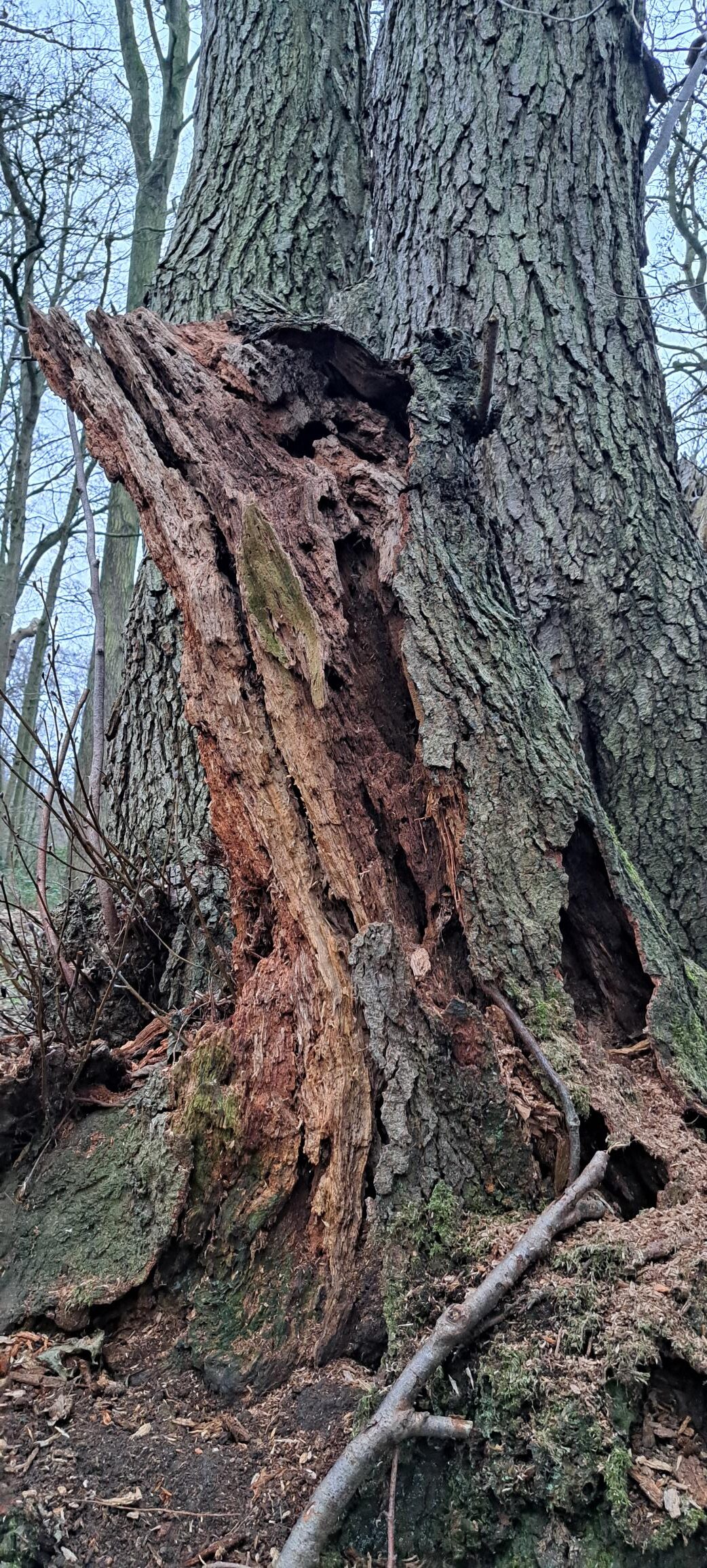
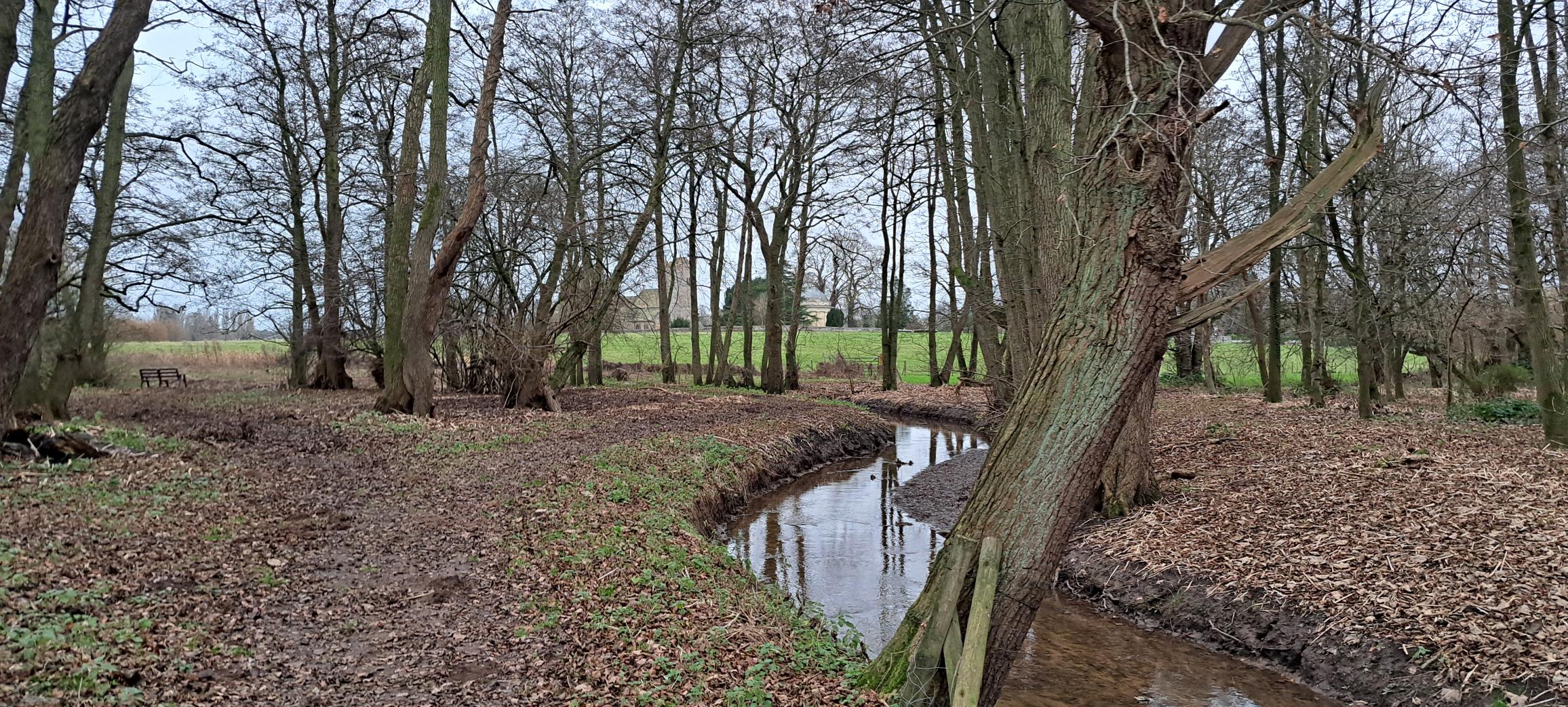
When you’re walking through Townend Field Nature Reserve, you might notice fallen branches, rotting logs, or old tree trunks left where they lie. While it can look untidy at first glance, this dead wood is one of the most valuable habitats in the reserve and plays a vital role in supporting wildlife and healthy ecosystems.. Photo right: A decaying trunk on ‘The Island.’
A Home for Wildlife
Dead wood provides food, shelter and breeding spaces for a huge range of UK species. Many animals depend on it for at least part of their life cycle. Some of the wildlife it supports includes:
- Invertebrates such as stag beetles, woodlice, centipedes and many species of beetle that feed on decaying wood
- Fungi and lichens, including bracket fungi, which break down wood and recycle nutrients back into the soil
- Birds like great spotted woodpeckers, robins and wrens that hunt insects living in logs and crevices
- Mammals such as hedgehogs, bats and wood mice that use log piles for shelter and hibernation
- Amphibians including frogs, toads and newts, which find cool, damp hiding places beneath rotting wood
Nature’s Recycling System
Dead wood is a key part of the natural cycle. As it slowly decomposes:
- Nutrients are released back into the soil
- Soil structure improves, helping nearby plants and trees grow
- Carbon is stored, supporting climate regulation
This process helps keep the nature reserve healthy, resilient and full of life.
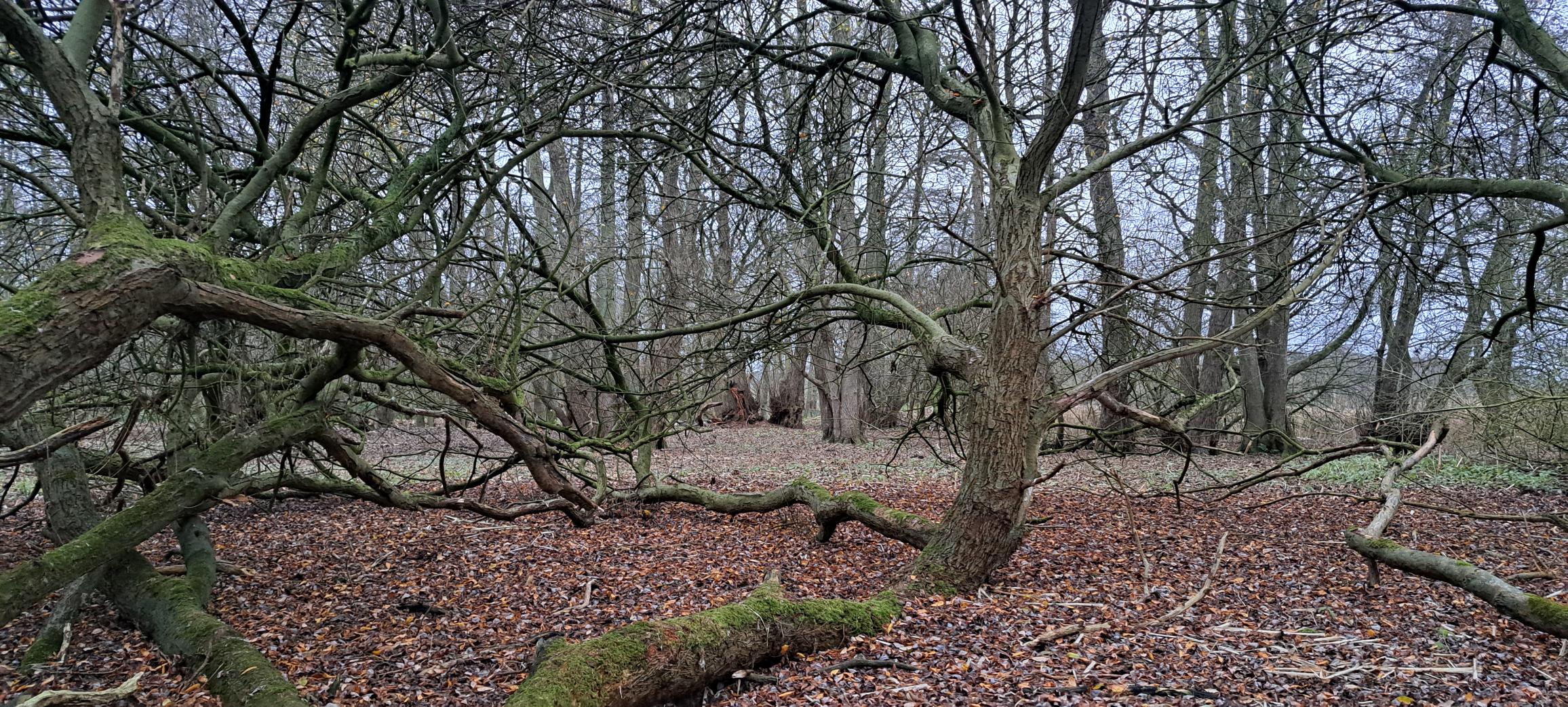
Why We Leave Dead Wood Alone
Removing fallen wood can disturb wildlife and destroy habitats that may have taken decades to form. Even a small pile of branches can be a crucial refuge, especially during winter or dry weather.